
Year. 2024
Location. Loveland Colorado
Area. 5,016 sf
Rain Shadow Lane
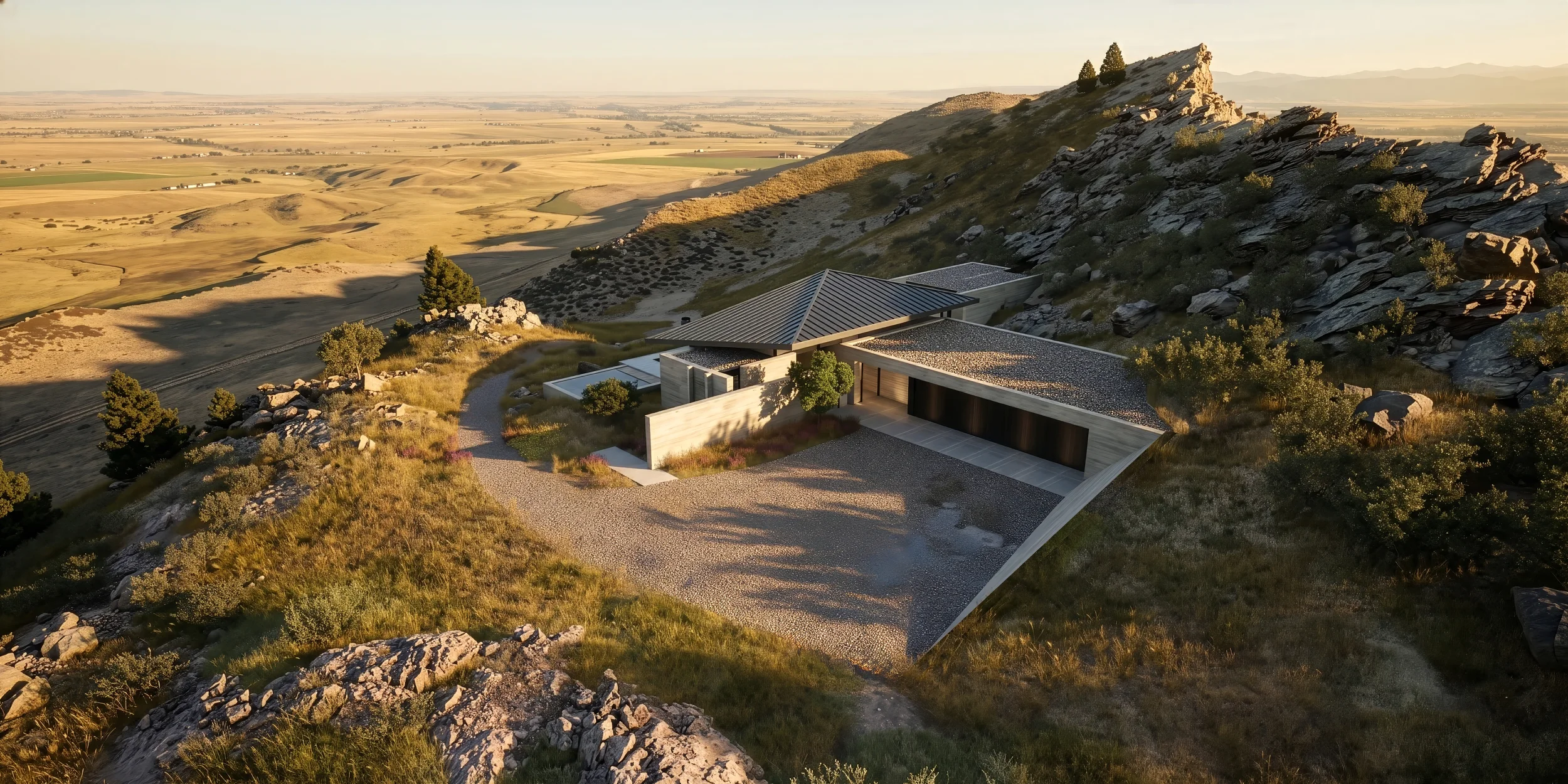
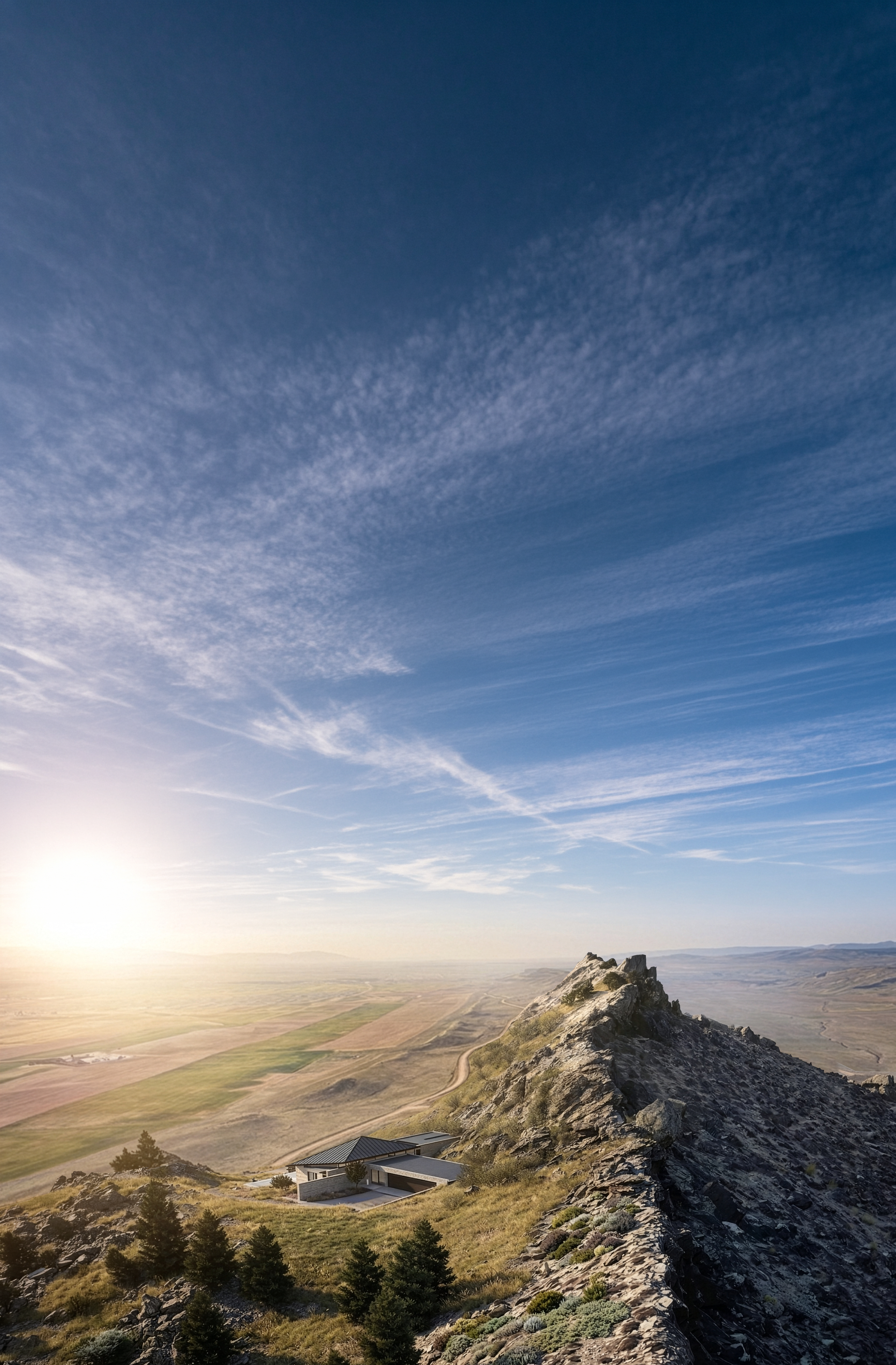
Discreetly nestled on a plateau just below the jagged peak of the hogback ridge west of Loveland, Colorado, Rain Shadow Lane occupies a vast, isolated curtilage of land. Here, the landscape marks a definitive threshold: to the east lies the endless, unyielding expanse of the Plains; to the west, the rising spine of the ridge signals the powerful beginnings of the Rocky Mountains.
In a space so monumental, one cannot help but notice the immensity of the surroundings and the relative scale of one’s self within it. Beyond the pragmatic fulfillment of a domestic program, the driving force behind this architecture is existential. It is an intentional attempt to address the fundamental question of what a building wants to be, transforming infinite space into an intimate place to call home.
The Architecture of Mediation
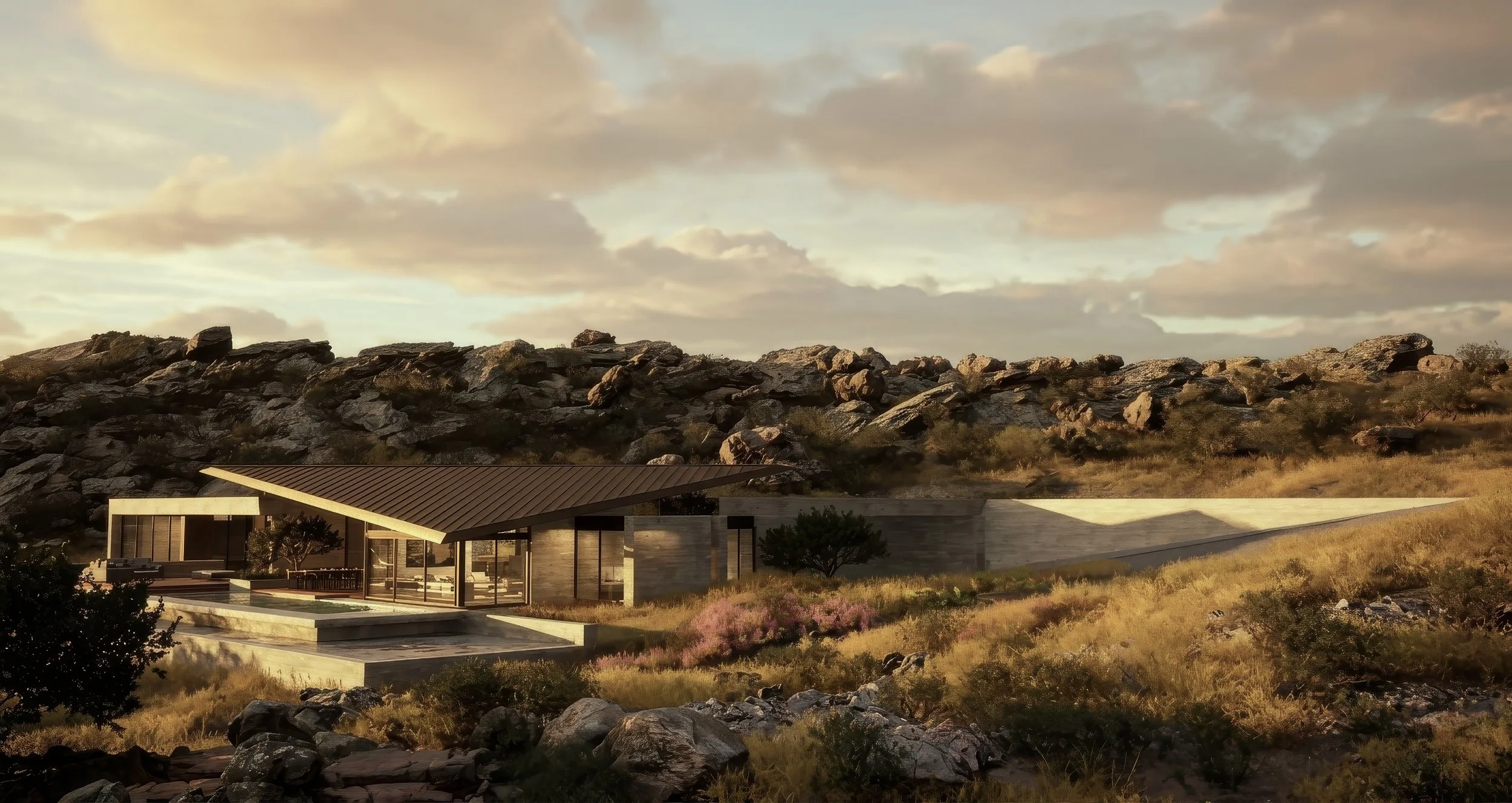
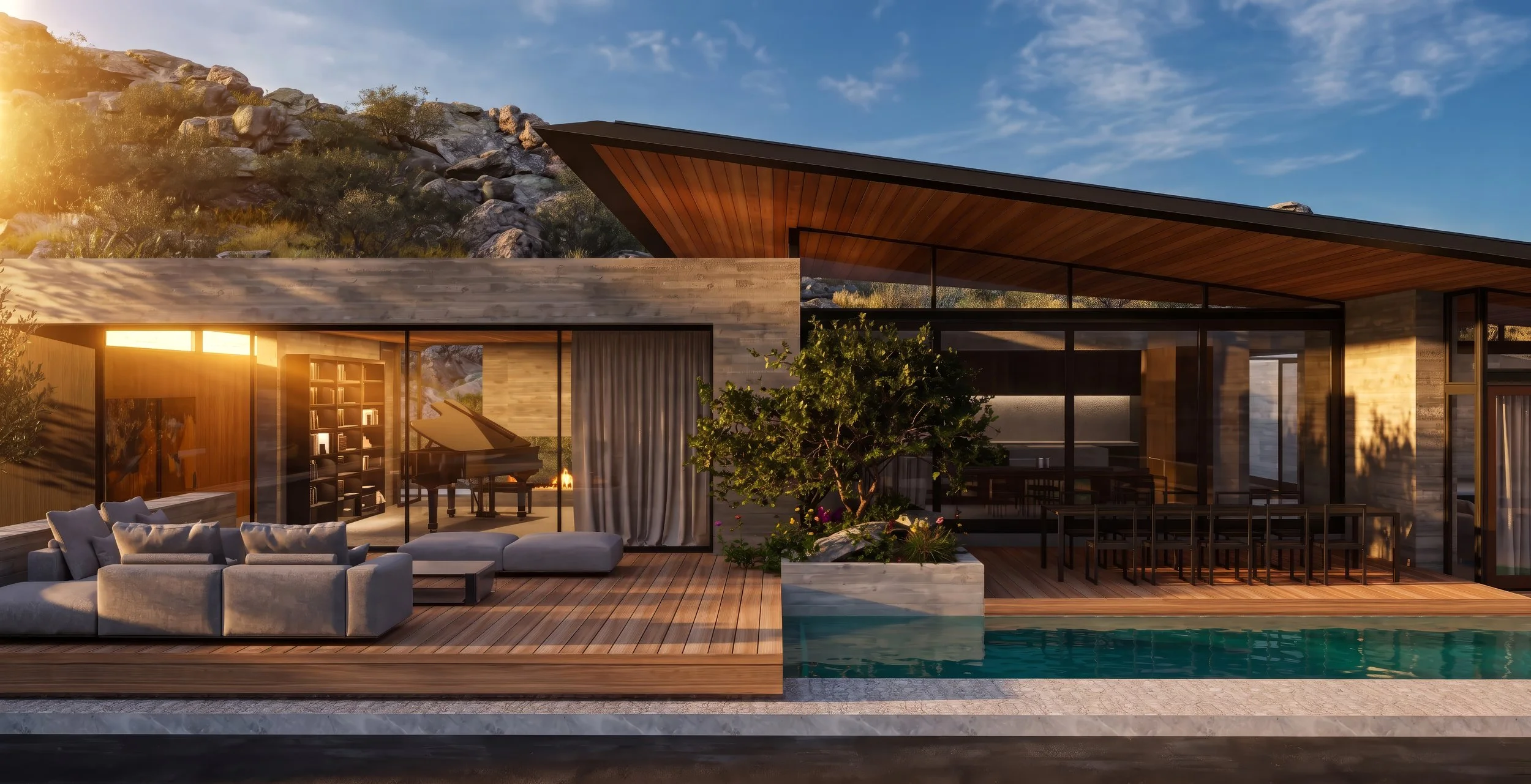
This home does not sit indifferently upon the earth, but acts as a conscious mediator between the beautiful, anonymous expanse of nature and the human need for grounding. To anchor itself against the immense scale, the architecture adopts a long, low, and rigorous rectilinear geometry. It does not attempt to conquer the terrain, but rather establishes a profound dialogue of relationality. Its geometric calmness claims the land, forming a spatial framework through which the inhabitants are brought into an active awareness of their own presence within the landscape.
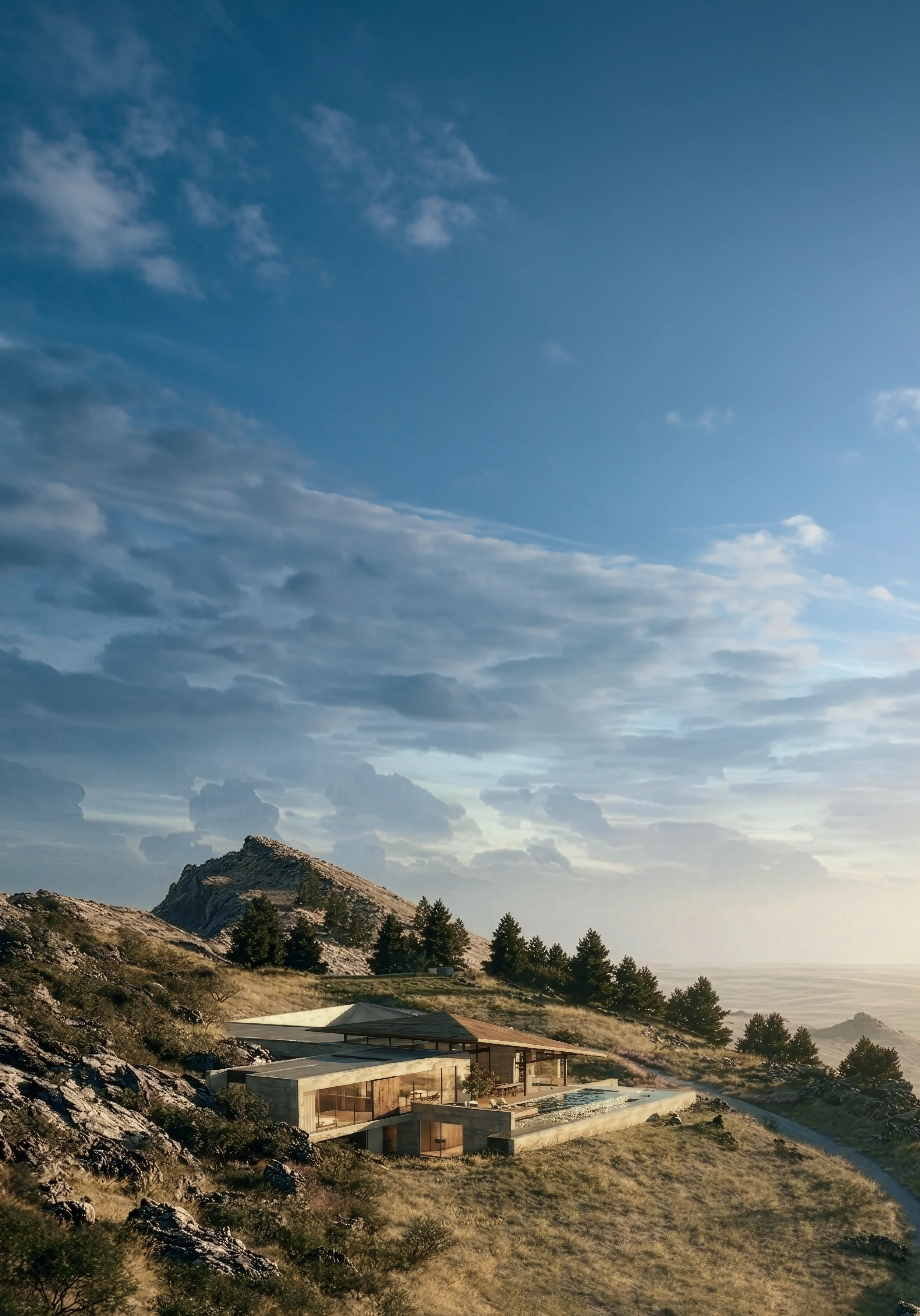
The home’s form unfolds in a simple T-shaped plan, designed to choreograph a specific relationship with the hillside. The main volume—containing the living, dining, kitchen, study, and primary bedroom suite—runs parallel to the natural contours of the hill rather than sitting perpendicular to the ridge. This deliberate oblique axis trades a predictable, overwhelming panorama for a more intimate perspective, casting the view south along the face of the hogback to offer an essential foreground to the vastness of the plains and horizon. This orientation also allows warm, southern light to permeate the full length of the living spaces.
Centrally off this main volume extends a northern leg that houses the garage and utilitarian spaces. This volume cuts into the rising slope of the land, burying itself to minimize the home's physical footprint. To the east of the garage, a solid, canted concrete wall cuts lightly into the hillside, framing the act of arrival by embracing the motor court and gently directing the pedestrian toward the entry. To the west, where the topography rises toward the ridgeline, the intersection of architecture and earth forms a sheltered evening courtyard. Guarded against severe mountain wind channels, this hollow captures the residual warmth of the setting summer sun, offering a quiet outdoor retreat from the vastness of the surroundings.
Mass and Matter
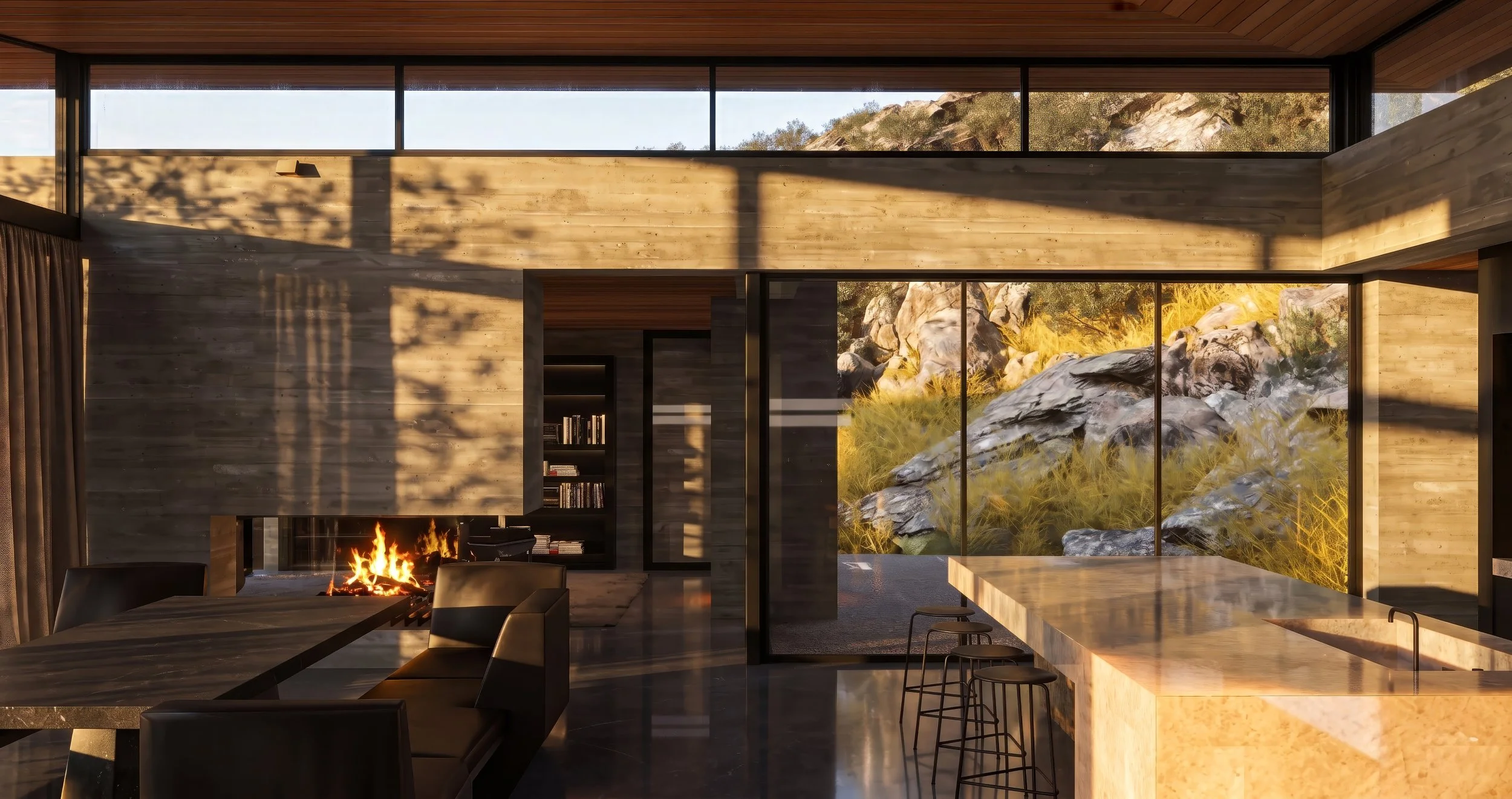
The structural language of the home relies on a deliberate, tactile contrast between tectonic weight and stereotomic lightness. The primary structural voice belongs to the primal weight of board-formed concrete. Heavy foundations emerge directly from the rocky terrain, establishing a physical connection to the earth. The rough, fractured texture of these mass walls retains the grain of the wooden forms, inviting an instinctive touch that senses temperature, density, and permanence.
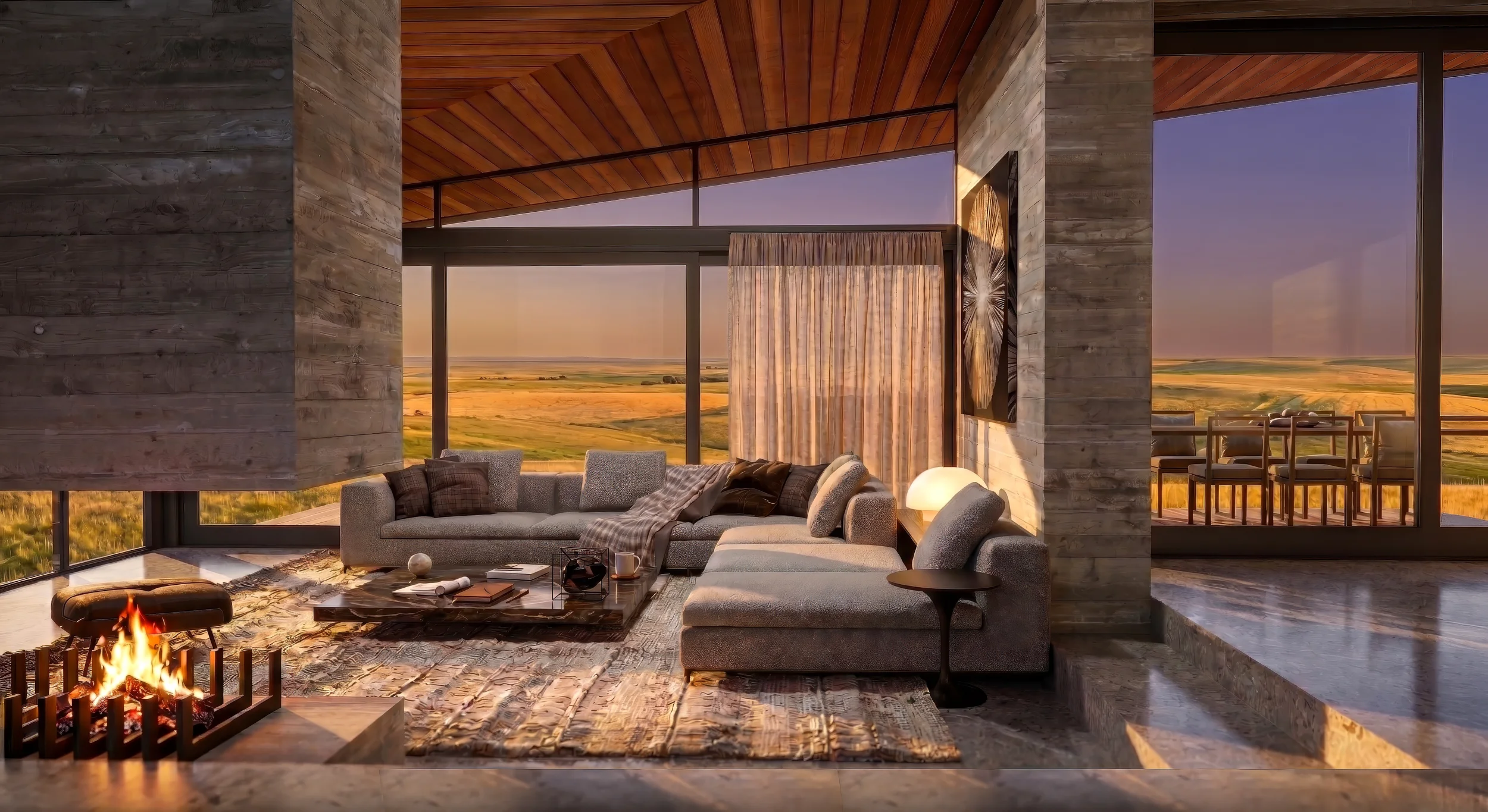
Inside, these vertical planes are sculpted to create striking cantilevers over the fireplaces—a controlled abstraction of the rugged mountain peaks. They weave through the home, separating functional spaces while providing a profound sense of psychological shelter and an awareness of one's place in time. Between these monolithic concrete masses, expansive panes of glass loosely define the perimeters of the interior, dissolving the boundary between interior atmosphere and exterior landscape to create a shared sensation of co-existence with the elements.
At the terminations of the home—the garage wing, the study, and the primary suite—thick concrete fascias and flat, stone-ballasted roofs cap the structure, reinforcing the sense of shelter. If the concrete represents the absolute seriousness of the earth, the central roof acts as its ethereal counterweight. Over the kitchen, dining, and living spaces, a warm cedar ceiling glides gracefully above the mass walls, separated by continuous clerestory windows. Tapering to a fine knife-edge, its generous eaves extend far beyond the perimeter, perfectly proportioned to shade the interior from the harsh summer sun while inviting low winter light deep into the home. Tilting toward the silhouette of the rocky ridge behind it and lifting to the east, the roofline mimics the geological vectors of the mountains, gathering the late afternoon light.
Spatial Reveals and the Grounded Self
The experience of the home is further shaped through a series of spatial reveals that balance exposure with protection. Upon entering, one steps down into the earth—a deliberate compression to enhance the occupant's awareness of space and enclosure.
Hidden behind a secondary concrete wall lies a secret courtyard containing a still body of water, offering a vital existential connection to life in this arid environment and a pure reflection of the sky above. Upon arrival, visitors receive only a fleeting glimpse of this sanctuary. It is only after crossing the threshold into the living room and turning back toward the entry that the courtyard and water feature are fully revealed, juxtaposing immediate intimacy against the boundless landscape outside.
This sense of grounding extends directly underfoot, where the concrete floor plate steps subtly throughout the interior to mirror the natural grade. A sunken entry and lounge contrast with an elevated dining platform and study, demanding a physical awareness of the earth and creating pockets of warmth, enclosure, and safety.
Ultimately, Rainshadow Lane operates on a biological and evolutionary level, striking an intentional balance between refuge, through the primal security of the concrete mass, and prospect, through the open perception of the infinite horizon. As the mountain air shifts across the plateau, low-focused light rakes across raw concrete walls, and the subtle scent of cedar and stone fills the air, the home acts as a full sensory reawakening. It rejects conceptual artifice in favor of a natural givenness, inviting its inhabitants to slow down, breathe, and experience the quiet authority of their own existence within the wild.